Grand County Dog Registration Information
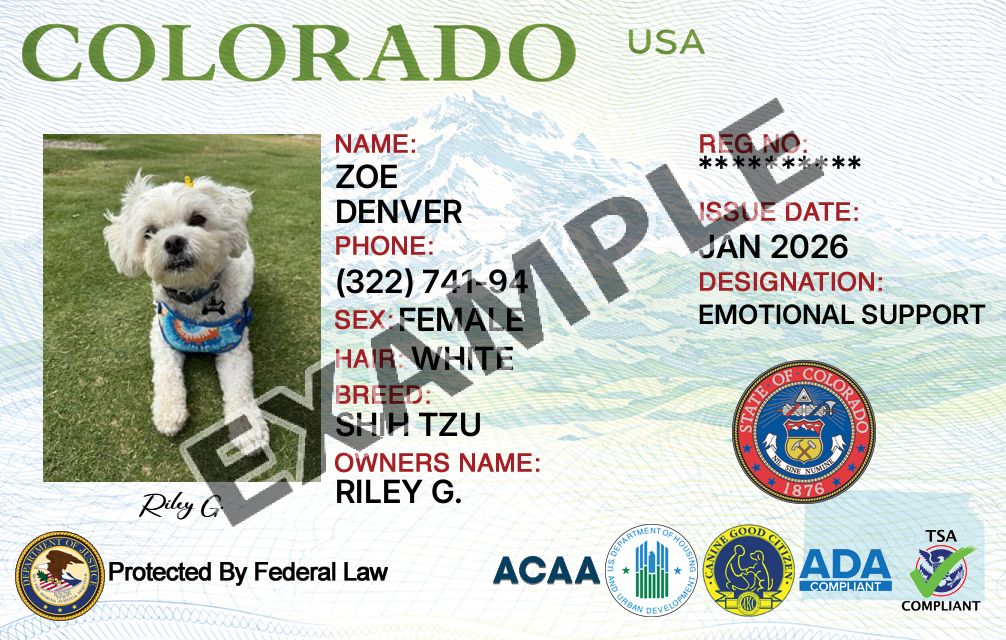
Service Dogs and Emotional Support Animals in Grand, Colorado
If you’re asking where do I register my dog in Grand County, Colorado for my service dog or emotional support dog, the key point is that your dog’s license (registration) is usually handled through local animal control and participating town halls—and it’s separate from whether your dog qualifies as a service animal or an emotional support animal.
In Grand County, dog registration is commonly tied to rabies vaccination proof and an annual county tag. This page explains how a dog license in Grand County, Colorado typically works, which official offices to start with, and how licensing differs from service dog or emotional support animal status.
Where to Register or License Your Dog in Grand County, Colorado
Because licensing is often handled at the county or city level, the offices below are common starting points for animal control dog license Grand County, Colorado questions and county tag registration. Use the office that matches where you live (in town limits vs. unincorporated Grand County), and confirm what paperwork and payment methods they accept before visiting.
Grand County Animal Shelter (Grand County Sheriff’s Office – Animal Control & Shelter)
Physical Address: 3475 Co Rd 57
City/State/ZIP: Granby, CO 80446
Phone: 970-887-2988
Office Hours: Monday – Friday, 11 a.m. – 4 p.m.
Mailing Address: P.O. Box 1972, Granby, CO 80446
This is the primary county-level office for animal care and control services and a key resource for county dog tags and registration requirements.
Town of Granby – Town Hall
Street Address: Zero Jasper Avenue
City/State/ZIP: Granby, CO 80446
Phone: 970-887-2501
Email: info@townofgranby.com
Office Hours: Mon–Thurs 8:00 a.m.–5:00 p.m.; Fri 8:00 a.m.–4:30 p.m.
Mailing Address: P.O. Box 440, Granby, CO 80446
Granby notes that dogs must be licensed and that proof of current rabies vaccination is required at the time of purchase.
Town of Hot Sulphur Springs – Town Hall
Street Address: 513 Aspen Street
City/State/ZIP: Hot Sulphur Springs, CO 80451
Phone: 970-725-3933
Email: townclerk@townofhss.com
Office Hours: Monday–Friday, 9 a.m.–12 p.m. and 1 p.m.–5 p.m.
Mailing Address: P.O. Box 116, Hot Sulphur Springs, CO 80451
A practical option if you live in or near Hot Sulphur Springs and need to ask about local licensing procedures or forms.
Town of Kremmling – Town Hall
Street Address: 200 Eagle Avenue
City/State/ZIP: Kremmling, CO 80459
Phone: 970-724-3249
Email: manager@townofkremmling.org
Office Hours: Monday–Friday, 8:00 a.m.–5:00 p.m.
Mailing Address: P.O. Box 538, Kremmling, CO 80459
If you’re in the Kremmling area, the Town Hall is an official office to contact to confirm local requirements and where to pay.
Town of Grand Lake – Town Hall
Street Address: 1026 Park Avenue
City/State/ZIP: Grand Lake, CO 80447
Phone: 970-627-3435
Office Hours: Monday–Friday, 8:30 a.m.–4:30 p.m.
Mailing Address: P.O. Box 99, Grand Lake, CO 80447
If you live in Grand Lake, start here to confirm town handling vs. county handling for your dog’s registration.
Town of Winter Park – Town Hall
Street Address: 50 Vasquez Road
City/State/ZIP: Winter Park, CO 80482
Phone: 970-726-8081
Mailing Address: P.O. Box 3327, Winter Park, CO 80482
A good contact point for residents in Winter Park to confirm whether licensing is processed at Town Hall, via the county, or both.
Overview of Dog Licensing in Grand County, Colorado
What “registering” usually means in Grand County
When residents ask where to register a dog in Grand County, Colorado, they typically mean obtaining the local annual tag (registration) required by the county and/or the town they live in. In practice, “registration” is usually the same thing as getting a dog license in Grand County, Colorado—a local requirement that helps animal control identify owners, track rabies compliance, and return lost pets.
County tag requirements and renewal timing
Grand County Animal Control indicates that dogs in Grand County must be registered and wear a current rabies and county tag, and that county tags are renewed annually in January. The county also notes that proof of current rabies vaccination is required to purchase a county tag, and that tags may be purchased through multiple local outlets (including the county shelter and participating town halls and veterinarians).
Rabies vaccination and enforcement (why it matters for licensing)
Rabies is a serious public health concern, and local licensing programs often function as an enforcement point: before a tag is issued, you typically must show a current rabies vaccination certificate. Even if your dog is a service dog or an emotional support animal, rabies vaccination and local registration rules generally still apply.
How Dog Licensing Works Locally in Grand County, Colorado
Step 1: Identify the right jurisdiction (town vs. unincorporated county)
The most common reason people get stuck is that “Grand County” includes multiple towns and unincorporated areas. Your address determines where you should start:
- Inside town limits: Your town may sell licenses/tags at Town Hall or direct you to the county process.
- Unincorporated Grand County: Start with Grand County Animal Shelter/Animal Control and confirm where tags can be purchased closest to you.
Step 2: Gather the usual documents
Licensing offices commonly ask for proof of rabies vaccination and owner information. Some towns also require proof that the dog is spayed/neutered to determine the correct fee category (when applicable). If you are relocating, it also helps to have documentation showing your current Grand County address.
Step 3: Purchase the tag (and keep it current)
After you present required documentation and pay the fee, you’ll receive a tag that should be attached to your dog’s collar. Keeping your tag current can help if your dog gets lost, and it demonstrates compliance if animal control contacts you.
Step 4: Understand what licensing does (and does not) do
- Licensing does: create a local registration record, support animal control identification, and reinforce rabies compliance.
- Licensing does not: establish service dog status, provide special access rights, or convert a pet into a protected assistance animal.
Service Dog Laws in Grand County, Colorado
What qualifies as a service dog
A service dog is generally understood as a dog that is individually trained to do work or perform tasks for a person with a disability. The tasks must be directly related to the person’s disability (for example, guiding, alerting, retrieving, interrupting harmful behaviors, or assisting with mobility).
Registration and “certification” myths
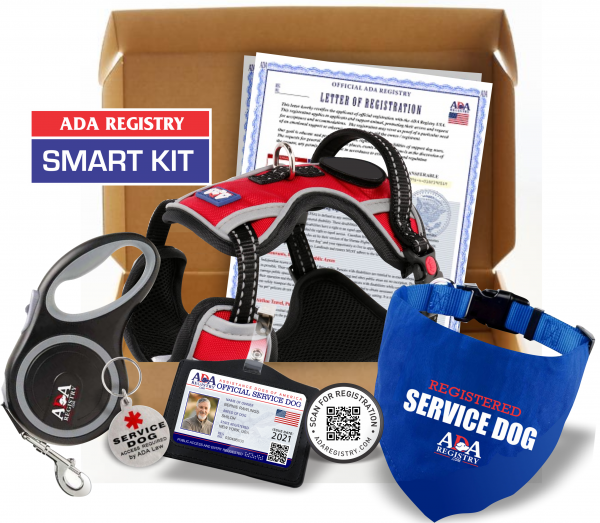
There is a lot of confusion online about “registering” a service dog. Local dog licensing (county tag registration) is about animal control and rabies compliance. It is separate from disability law protections. In other words, you may need a local dog license even if your dog is a service dog, and buying a local license does not “certify” a dog as a service animal.
Public access vs. local licensing
Service dog public access rights (for trained service dogs assisting a person with a disability) are different from local animal control rules. In practice:
- Public access: focuses on whether the dog is trained to perform disability-related tasks and is under control.
- Licensing: focuses on local identification and rabies compliance, which usually applies to all dogs regardless of working status.
Emotional Support Animal Rules in Grand County, Colorado
What an emotional support animal (ESA) is—and isn’t
An emotional support animal is a companion animal that provides comfort that helps with a person’s mental or emotional health condition. ESAs are commonly addressed in the housing context. However, an ESA is not the same as a trained service dog and generally does not have the same public access rights.
Licensing still applies to ESAs
If your dog is an ESA, you should still plan to obtain the appropriate animal control dog license Grand County, Colorado requires. Local animal control licensing is usually based on residency and rabies requirements—not on whether a dog is a pet, an ESA, or a service dog.
Housing documentation vs. county registration
ESA documentation (when applicable) is typically used to request reasonable accommodation in housing. County or town dog licensing is a separate process and usually requires proof of rabies vaccination and payment of the local fee. Keeping these concepts separate will help you avoid scams and avoid delays at the licensing counter.
Frequently Asked Questions
Register A Dog In Other Colorado Counties
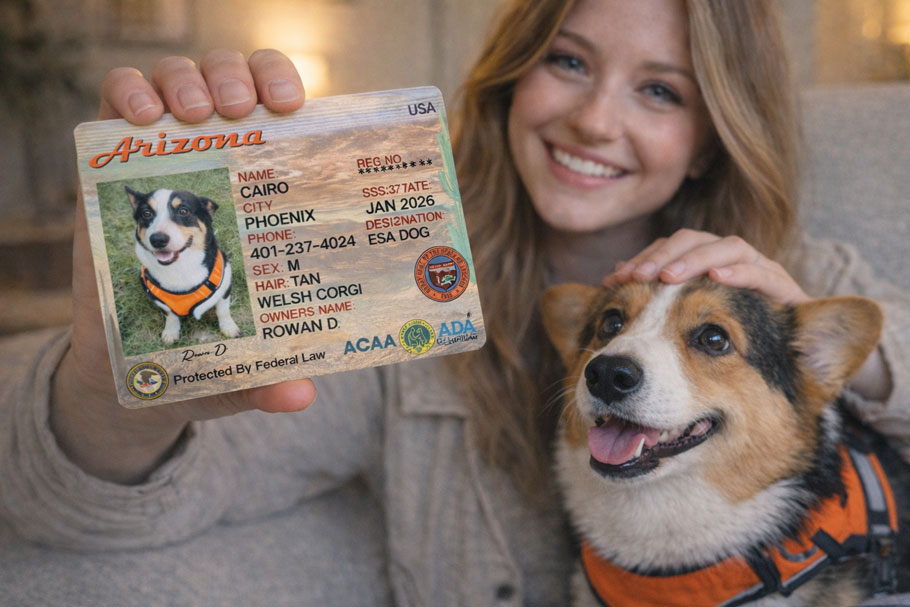
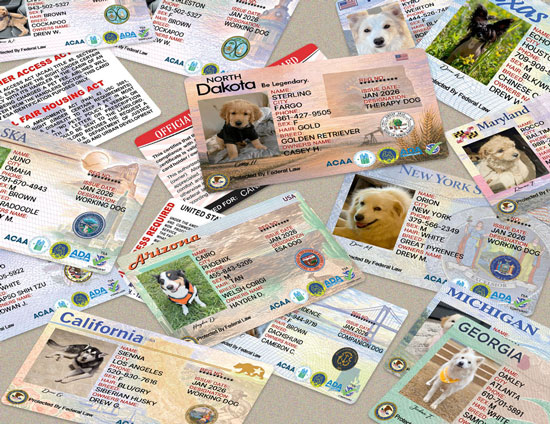
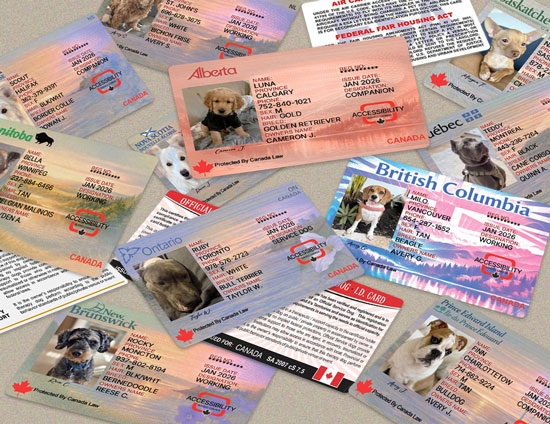
Select your county below to get started with your dog’s ID card. Requirements and license designs may vary by county, so choose your location to see the correct options and complete your pup’s registration.
- Adams County Dog Registration
- Alamosa County Dog Registration
- Arapahoe County Dog Registration
- Archuleta County Dog Registration
- Baca County Dog Registration
- Bent County Dog Registration
- Boulder County Dog Registration
- Broomfield County Dog Registration
- Chaffee County Dog Registration
- Cheyenne County Dog Registration
- Clear Creek County Dog Registration
- Conejos County Dog Registration
- Costilla County Dog Registration
- Crowley County Dog Registration
- Custer County Dog Registration
- Delta County Dog Registration
- Dolores County Dog Registration
- Douglas County Dog Registration
- Eagle County Dog Registration
- El Paso County Dog Registration
- Elbert County Dog Registration
- Fremont County Dog Registration
- Garfield County Dog Registration
- Gilpin County Dog Registration
- Gunnison County Dog Registration
- Hinsdale County Dog Registration
- Huerfano County Dog Registration
- Jackson County Dog Registration
- Jefferson County Dog Registration
- Kiowa County Dog Registration
- Kit Carson County Dog Registration
- La Plata County Dog Registration
- Lake County Dog Registration
- Larimer County Dog Registration
- Las Animas County Dog Registration
- Lincoln County Dog Registration
- Logan County Dog Registration
- Mesa County Dog Registration
- Mineral County Dog Registration
- Moffat County Dog Registration
- Montezuma County Dog Registration
- Montrose County Dog Registration
- Morgan County Dog Registration
- Otero County Dog Registration
- Ouray County Dog Registration
- Park County Dog Registration
- Phillips County Dog Registration
- Pitkin County Dog Registration
- Prowers County Dog Registration
- Pueblo County Dog Registration
- Rio Blanco County Dog Registration
- Rio Gande County Dog Registration
- Routt County Dog Registration
- Saguache County Dog Registration
- San Juan County Dog Registration
- San Miguel County Dog Registration
- Sedgwick County Dog Registration
- Summit County Dog Registration
- Teller County Dog Registration
- Washington County Dog Registration
- Weld County Dog Registration
- Yuma County Dog Registration